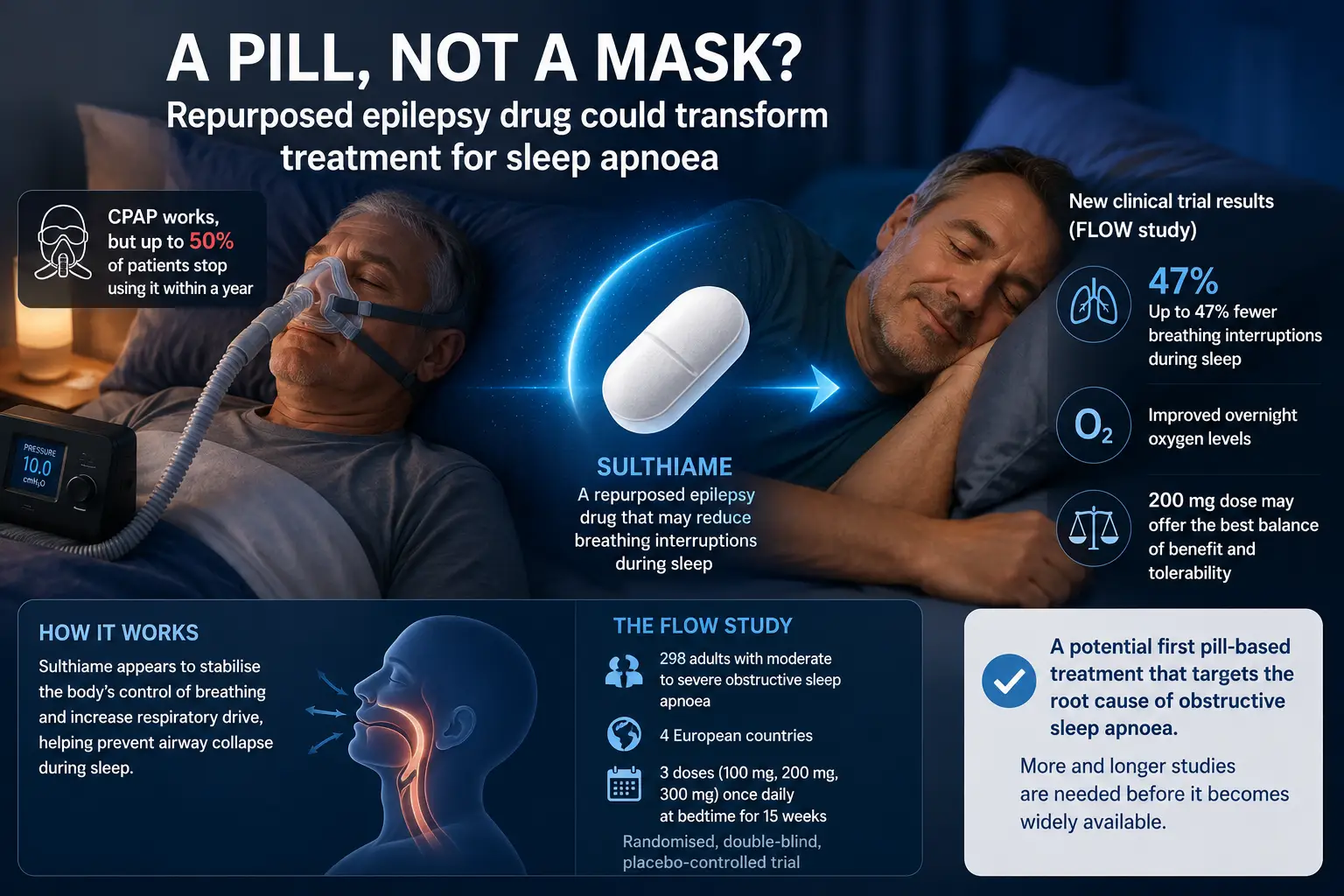

It is well known that sleep apnoea, a potentially serious disorder, can lead to many systemic complications throughout the body. It is associated with hypertension, diabetes, coronary artery disease, congestive heart failure and atrial fibrillation, all of which may predispose one to a stroke.
If left un-treated, these are not the only effects sleep apnoea can have on our bodies however. Not many people may stop to think what can potentially be happening to our eyes. Obstructive sleep apnoea (OSA) has been implicated as an aggravating factor in a number of ocular complications. These include Floppy Eyelid Syndrome, Glaucoma, Papilledema, Retinal Vein Occlusion and Nonarteritic Anterior Ischemic Optic Neuropathy (NAION).
The relationships between these eye disorders and OSA has been neatly summarised in a recent article by the Alaska Sleep Education Centre. To find out more, cast your eyes over the following:
Floppy Eyelid Syndrome
Floppy Eyelid Syndrome (FES) is an often under-diagnosed eye condition where the patient has an extremely large and floppy upper eyelid that can easily turn inward or outward. Patients initially complain about symptoms including eye irritation, redness, discharge, and may describe their eyelids spontaneously “flip over” while they sleep.
Obesity may be a confounding factor in the association of FES and OSA, as many patients with OSA suffer from obesity. Some patients may have a history of pre-existing OSA. OSA tends to be more sever in FES Patients. 96% of patients with FES have OSA and approximately 16% of OSA patients have FES.
These symptoms in association with increased body mass index and a diagnosis of obstructive sleep apnea should alert the ophthalmologist about the high likelihood of having floppy eyelid syndrome.
Glaucoma
Glaucoma is a disease that damages your eye’s optic nerve. It normally starts when fluid builds up in the front part of your eye. This build up increases the pressure in your eye which damages your optic nerve. Glaucoma is a leading cause of blindness for people over 60 years old and affects nearly 60 million people worldwide. With early detection and treatment blindness from glaucoma can be prevented.
The most common form of glaucoma is called primary open-angle glaucoma. According to new research, from Taipei Medical University, sleep apnea is an independent risk factor for open-angle glaucoma. Those who had been diagnosed with OSA were 1.67 times more likely to have open-angle glaucoma in the five years after their diagnosis than those without the sleep condition. Patients with glaucoma were 12.9% more likely to have OSA.
Papilledema (aka optic disc swelling)
Papilledema is linked to idiopathic intracranial hypertension (in layman terms that means random/spontaneous pressure around the brain) and may be associated with increased blood flow. An increase in CO2 concentrations can result from interrupted breathing such as OSA, may dilate blood vessels and increase pressure, leading to optic disc swelling. Symptoms include headaches, nausea and vomiting, and greying out or blurring of vision.
Patients with OSA have higher incidences of papilledema but also noticed that CPAP therapy treatment has been shown to improve or even resolve papilledema.
Retinal Vein Occlusion
Retinal Vein Occlusion (RVO) is common vascular disorder of the retina and one of the most common causes of vision loss worldwide, second only to diabetic retinopathy. RVO is a blockage in a vein that supplies blood and oxygen to the retina. Most patients experience a sudden painless change or loss in vision of the eye.
Studies have shown that OSA is a frequently associated condition in RVO patients and could be a triggering factor of the disorder. There was a higher than expected prevalence of OSA in patients with RVO. This association is thought to believe why most patients notice visual loss upon awakening.
Nonarteritic Anterior Ischemic Optic Neuropathy
Nonarteritic Anterior Ischemic Optic Neuropathy (NAION) refers to blood flow loss in the optic nerve of the eye. The condition is painless and typically causes vision loss in one eye. 75% of all cases of NAION discover their vision loss upon waking. NAION is the most common acute optic neuropathy in patients older than 50 years of age.
Patient cases have shown that 71% of patients with NAION have OSA. Research suggests patients with NAION should schedule a polysomnogram test to rule out the potential of having OSA. Also, the research suggests that patients with severe OSA who do not correctly comply with their CPAP treatment have an increased risk of second eye NAION vision loss.
Your next steps
Regular eye examinations are very important to detect any eye disorders and to prevent vision loss. Your ophthalmologist will be able to diagnose and treat any eye disorders you may have. If you are concerned about the relationship between your eye issues and sleep disorders speak with your ophthalmologist at your next visit. If they see any ocular signs of sleep apnea they can refer you to an accredited sleep clinic to schedule a polysmonogram to check for OSA.
Web Source:
http://www.alaskasleep.com/blog/5-eye-issues-and-sleep-disorders-the-ocular-component-of-sleep-apnea