
What is TECSA?
Obstructive sleep apnoea (OSA) occurs when the upper airway repeatedly narrows or closes during sleep, even though the body is still trying to breathe.
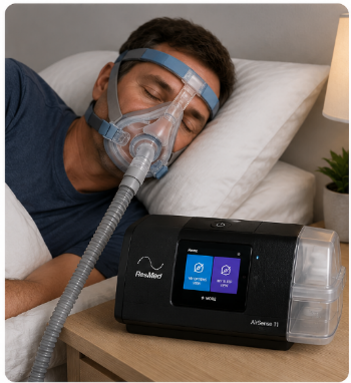
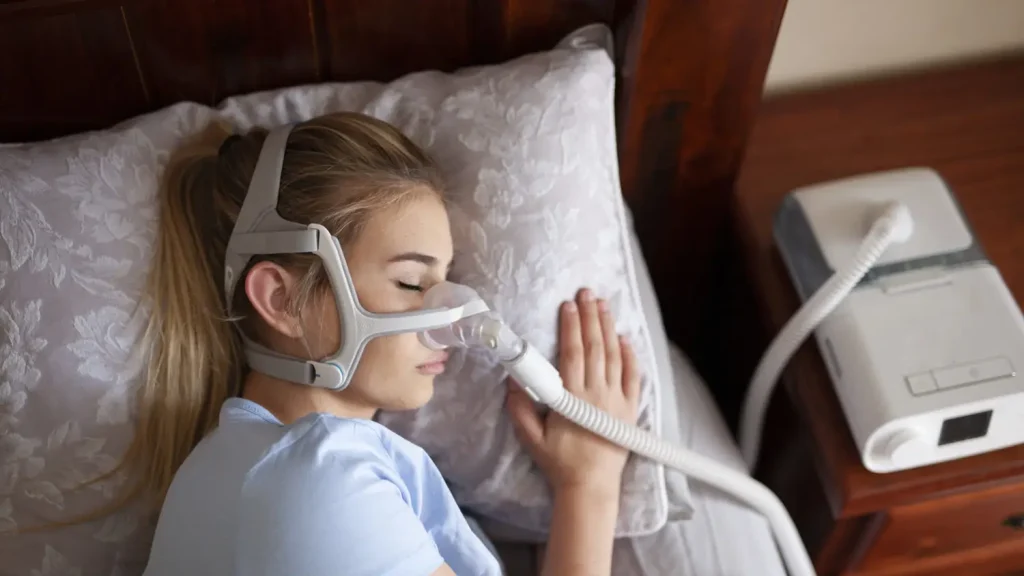
CPAP helps keep the airway open. In some people, once these obstructive events are treated, a different type of breathing pause can appear. This call treatment-emergent central sleep apnoea (TECSA).
Unlike an obstructive apnoea, during a central apnoea there is a temporary pause in the brain’s drive to breathe, so there is little or no breathing effort.
Why can this happen?
Breathing during sleep is strongly influenced by the amount of carbon dioxide (CO2) in the blood. Our bodies continuously produce CO2 as a by-product of metabolism, and breathing removes it through the lungs.
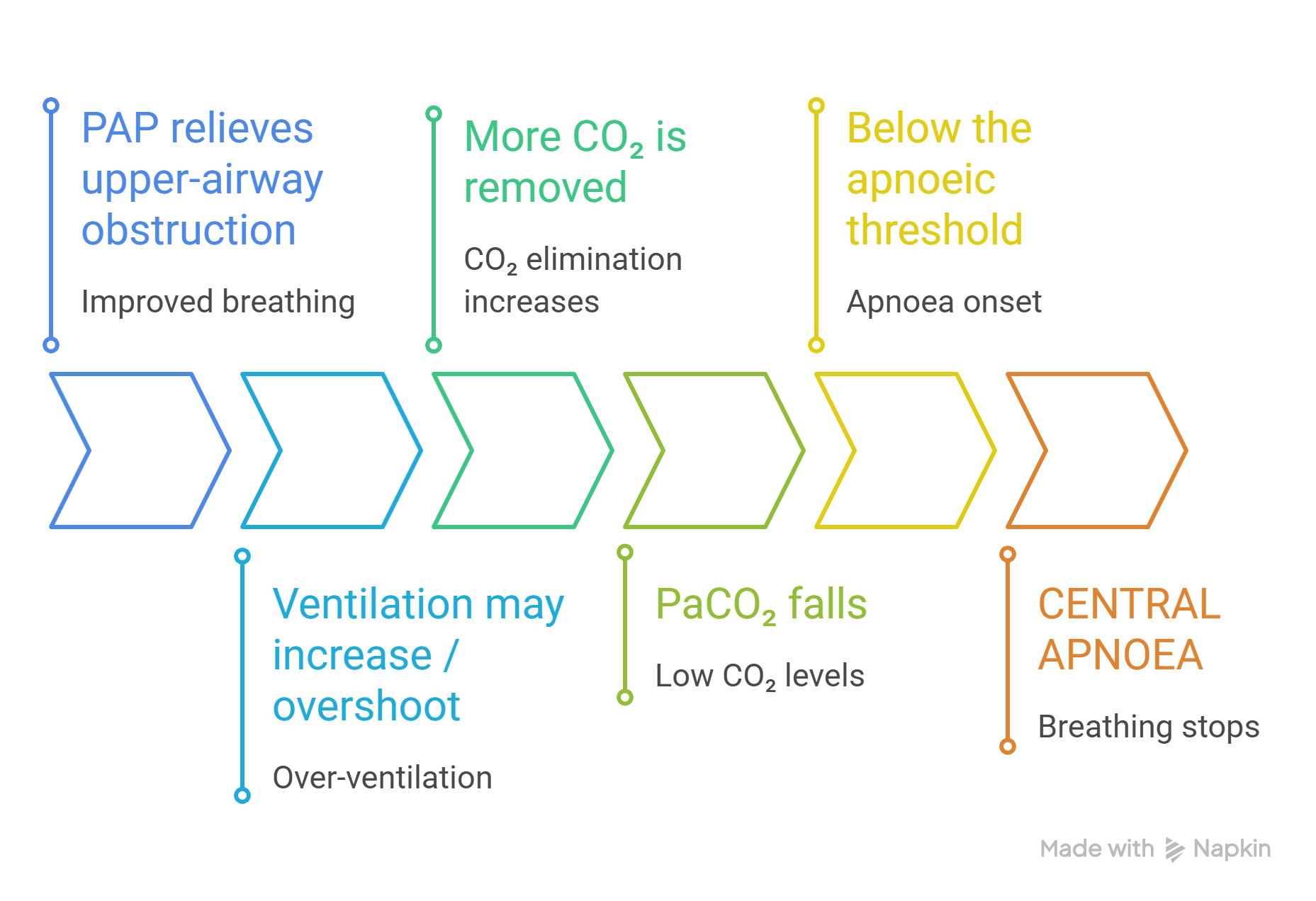
During sleep, if CO2 falls below a certain level (referred to as the apnoeic threshold) the drive to breath can temporarily stop.
The role of an over-responsive breathing system
Some people have a respiratory control system that responds very strongly to relatively small changes in CO2 (referred to as high loop gain). A small rise in CO2 can trigger a large increase in breathing. This may remove more CO2 than necessary, causing CO2 to fall too far and briefly switching off the respiratory drive to breathe.
What does CPAP have to do with it?
CPAP makes breathing more effective by keeping the upper airway open. For most people with OSA, this improves breathing throughout the night.
In someone with a highly responsive respiratory control system, however, improved ventilation can contribute to CO2 falling below the apnoeic threshold. The obstruction has been treated, but central breathing pauses may emerge.
Does it mean CPAP isn’t working?
Not necessarily. Treatment-emergent central events can resolve over time with continued CPAP therapy in some people. If they persist, clinicians can assess the breathing pattern and determine whether treatment changes are required. An occasional central apnoea during a sleep study does not necessarily mean someone has TECSA. Diagnosis depends on the overall pattern of breathing events during treatment.
References
Zhang, J., Wang, L., Guo, H. J., Wang, Y., Cao, J., & Chen, B. Y. (2020). Treatment-emergent central sleep apnea: A unique sleep-disordered breathing. Chinese Medical Journal, 133(22), 2721-2730.
Nigam, G., Riaz, M., Chang, E. T., & Camacho, M. (2018). Natural history of treatment-emergent central sleep apnea on positive airway pressure: A systematic review. Annals of Thoracic Medicine, 13(2), 86-91.