
New research presented at the American College of Cardiology’s 68th Annual Scientific Session found that people who took advantage of a midday siesta were more likely to have a noticeable drop in blood pressure compared with those who didn’t nap. One of the researchers, Kallistratos concluded: “We obviously don’t want to encourage people to sleep for hours on end during the day, but on the other hand, they shouldn’t feel guilty if they can take a short nap, given the potential health benefits,”. “Even though both groups were receiving the same number of medications and blood pressure was well controlled, there was still a significant decrease in blood pressure among those who slept during midday.”
The study included 212 people with a mean blood pressure of 129.9 mmHg. They were 62-years-old on average and just over half were female. About 1 out of 4 participants were smokers and/or had Type 2 diabetes. The groups were similar in terms of risk factors for heart disease except there were more smokers in the napping group. Researchers assessed and recorded blood pressure for 24 hours consecutively, midday sleep time (the average duration was 49 minutes), lifestyle habits (for example, alcohol, coffee and salt consumption, physical activity levels), and pulse wave velocity (a measure of stiffness in the arteries). Participants wore an ambulatory blood pressure monitor to measure and track blood pressure at regular intervals during routine daily living, rather than just one time in the clinic. At study recruitment, participants also underwent an echocardiogram, an ultrasound of the heart that shows its structure and function.
In their analyses, researchers adjusted for factors known to influence blood pressure levels, including age, gender, lifestyle, and medications. There were no differences in terms of the number of anti-hypertensive medications taken between the two groups, and pulse wave velocity tests and echocardiograms were also similar. Overall, average 24-hour systolic blood pressure was 5.3 mmHg lower among those who napped compared with those who didn’t (127.6 mmHg vs 132.9 mmHg). When looking at both blood pressure numbers, people who slept during the day had the more favourable readings (128.7/76.2 vs 134.5/79.5 mmHg). There also appeared to be a direct linear relationship between total time spent asleep and blood pressure; for each hour of napping, the average 24-hour systolic blood pressure lowered by 3 mmHg.
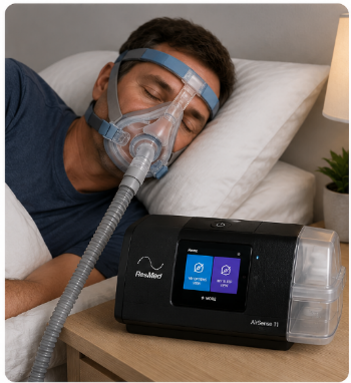
With this study showing another benefit of napping, the only thing to add here, as a suggestion, from our perspective is: if you have OSA + hypertension and if you currently use your CPAP machine overnight, would it make a difference should you take your daytime nap using your CPAP or not? Studies have shown that treatment for sleep apnoea with continuous positive airway pressure (CPAP) may aid in lowering blood pressure levels. CPAP is especially effective in patients with resistant hypertension, serving as a potential treatment for these high-risk patients.
References
- http://www.sleepreviewmag.com/2019/03/daytime-nap-drop-blood-pressure/?ref=cl-title
- High Blood Press Cardiovasc Prev. 2017 Sep;24(3):341-346. doi: 10.1007/s40292-017-0190-7. Epub 2017 Mar 21.
- Blood Pressure and Metabolic Changes After 3-Month CPAP Therapy in a Very Elderly Obese with Severe Obstructive Sleep Apnea: A Case Report and Review of the Literature.
- Spannella F1,2, Giulietti F1,2, Di Pentima C1,2, Lombardi FE1,2, Borioni E1,2, Sarzani R3,4. https://www.ncbi.nlm.nih.gov/pubmed/28324596