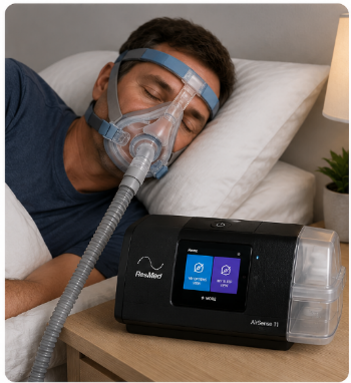

It is well known that there is a close association between OSA and cardiovascular disease. OSA has been identified as an independent risk factor in the onset of atrial fibrillation, which has significant consequences on mortality and morbidity in the general population. A 2020 study found that the use of CPAP therapy for patients with moderate-severe OSA and cardiac arrhythmia had a positive impact in maintaining sinus rhythm at a 1-year follow-up. The study included patients between 18-80 years old with paroxystic/persistent AF/flutter and high pretest suspicion of OSA (including snoring, apnoea, obesity and/or excessive daytime sleepiness). Patients completed a CPAP titration study followed by CPAP therapy in addition to pharmacological treatment and/or ablative intervention. At the 1-year follow-up patients were split into two groups; patients compliant with CPAP therapy (group A) and patients who ceased CPAP therapy (group B). Patient’s AHI and usage was downloaded from their CPAP device and resting ECG and ESS were completed. The group of patients who maintained CPAP compliance were found to have reduced incidence of AF/flutter (23.53%) at the 1-year follow-up compared to the group who ceased CPAP (65.22%). CPAP therapy in conjunction with standard therapy for cardiac arrhythmias in patients with moderate-severe OSA therefore was found to have a favorable effect in maintaining sinus rhythm at the 1-year follow-up.
Source:
Griforiu, L.A., Dumitrache-Rujinski, S., Vatasescu, R.G., Erhan, I. & Bogdan, M.A. (2020) Obstructive sleep apnoea, cardiac arrhythmias and continuous positive airway pressure therapy: one-year follow-up. Pneumologia 69(1), 47-52.