
The recommendation comes after the team, from UC San Diego in California, USA, found that the proportion of COPD patients referred for PR who had sleep disordered breathing was much higher than in the general population.
“Pulmonary rehabilitation programs may provide unique platforms to incorporate measures of sleep assessment that could eventually benefit this highly selected group of patients”, Xavier Soler and colleagues write in the Annals of the American Thoracic Society.
The researchers studied 54 patients who had moderate or severe COPD (mean forced vital capacity 75.5 % predicted) who enrolled in their institution’s PR programme over a 2-year period.
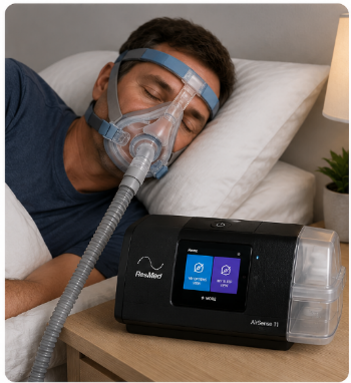
Using at-home somnography, they found that 23 (52.3%) of the 44 patients who completed the study had an apnoea–hypopnea index greater than five events per hour, indicating obstructive sleep apnoea (OSA). Seventeen of these cases were newly diagnosed. According to the authors, this compares with a rate of 10% to 15% in the general population and patients with COPD in epidemiological studies.
They also found that patients generally had low sleep efficiency – the percentage of time in bed spent asleep – with 45% having sleep efficiency defined as poor.
Patients also reported themselves that they had poor sleep quality, with a mean Pittsburgh Sleep Quality Index score of 7.9.
However, there were no significant differences in somnography parameters nor in quality of life, daytime sleepiness or St George’s Respiratory Questionnaire results between patients with and without OSA.
Soler and colleagues explain that the literature regarding sleep in COPD is mixed and not all studies have found an increased rate of OSA. However, they argue that patients with the condition may have particular problems that lead to poor sleep, such as heightened arterial hypoxemia, or changes in respiratory mechanics and cough and sputum production.
They note that concomitant COPD and OSA, also known as “overlap syndrome”, is associated with a high risk of cardiovascular problems, exacerbations and death.
They write: “Therefore, evaluating the presence of OSA in patients with advanced COPD seems logical as concurrence of these diseases may potentially explain the high cardiovascular morbidity and mortality in these patients.”