
Within the middle to older age group of 40-80 years, obstructive sleep apnoea (OSA) is a common type of sleeping disorder that is often associated with cognitive deficits. People with OSA may experience difficulty with memory, reduced attention span, have an increased risk of developing dementia and may even accelerate the onset of Alzheimer’s.
Previous research methods have used magnetic resonance imaging (MRI) to show an association with severe OSA and structural brain changes. As a potential biomarker of ageing, telomere length (TL), or shortened TL, has been associated with brain white matter hyperintensities and OSA. Oxidative stress may be enhanced by OSA due to the reduction of antioxidant capacity of blood circulation during nocturnal hypoxia. This oxidative stress may contribute to shorter telomeres, particularly among aged populations.
This prompted the Korean Genome and Epidemiology study (Sept 2016 SLEEP journal) to look at the effect of OSA and short TL in brain white matter. What this study did was provide first evidence of significant brain white matter abnormalities with mediated interaction of short TL for participants with OSA when compared to those with neither OSA nor short TL.
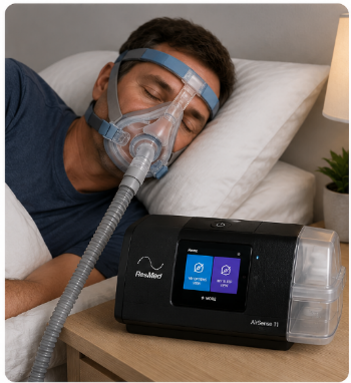
This information is critical in understanding the importance of leaving OSA untreated. CPAP is the recommended gold standard treatment for OSA. In the 2014 study by the Vita-Salute San Raffaele University in Italy they found that after one year of CPAP treatment, in patients that were compliant, there were significant changes in brain white matter. What was remarkable was the recovery of cognitive deficits showing improvements with memory, attention and almost complete reversal of brain white matter abnormalities. This research validates the importance of treating OSA with CPAP to improve brain white matter in people that are 40-80 years.