
Individuals with post-traumatic stress disorder (PTSD) commonly exhibit sleep disturbances/disorders to the extent that insomnia, obstructive sleep apnoea (OSA) and nightmares are considered core symptoms of PTSD. These symptoms are present in 70-90% of individuals with PTSD, with replication or symbolic representation of the traumatic event occurring in nightmares during REM or dream sleep. Furthermore, insomnia can be attributed to a fear of sleep and nightmares or a loss of control, which often exacerbates other symptoms involving sleep.
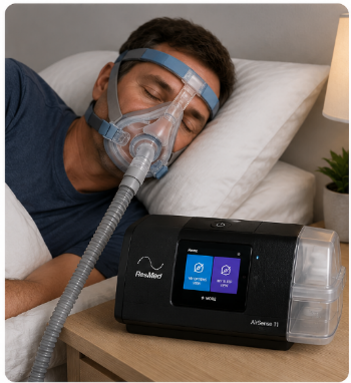
Fortunately, several high efficacy interventions are available and still being researched. For insomnia, CBT-I (cognitive behavioural therapy for insomnia) focuses on targeting different components of the sleep disorder including psycho-education of sleep and sleep hygiene, cognitive therapy, and relaxation therapy. Imagery rehearsal therapy (IRT) is the preferred empirical treatment for nightmares/night terrors and involve the creation of abstract ‘dream scripts’ in which the recurring nightmare is modified into a new scenario with a positive ending. in a randomised-controlled trial of PTSD sufferer, a 60% reduction of disturbing dreams and PTSD symptoms was seen in participants who received IRT compared to a control group. OSA can be successfully managed through the use of a CPAP machine, which supplies positive pressure to the upper airway in order to prevent obstructive events.
References.
- Lancal M, Marle H, Veen M, Schagen A (2021). Disturbed sleep in PTSD: Thinking beyond nightmares. Psychiatry. 12. https://doi.org/10.3389/fpsyt.2021.7677
- El-Solh A (2018). Management of nightmares in patients with posttaumatic stress disorder: current perspectives. Nat Sci Sleep. Pg. 409-420. 10.2147/NSS.S166089