
Studies have found that people with Obstructive Sleep Apnea (OSA) are significantly more likely to develop the blood sugar control problems seen in Type 2 Diabetes (T2DM), and vice versa. In fact, OSA is thought to affect around half of people with T2DM. These two conditions have a significant bidirectional overlap that can compound their negative effects on health, including increasing the risk of cardiovascular disease, stroke and worsening diabetes-related complications.
How does OSA contribute to T2DM, and vice versa?
OSA causes frequent disruptions in breathing during sleep that restricts the supply of oxygen to the body due to narrowing or complete blockage of the upper airway. The brain responds by briefly waking you (usually without you knowing it) to reopen the airway. Each of these awakenings can trigger a “fight-or-flight” response, releasing stress hormones like adrenaline and cortisol that stimulate the release of blood sugars.
These hormones are designed to help the body respond to danger, however, when this response happens repeatedly throughout the night, it can increase blood glucose and make the body’s cells less responsive to insulin, the key that allows glucose entry into cells. Over time, this repeated stress response can contribute to the insulin resistance and poor blood sugar control seen in T2DM.
The relationship can also work in the other direction, where T2DM can then worsen OSA by increasing obesity and fat around the neck, and damaging the nerves important in keeping the airway open.
Treating OSA to help regulate blood sugar
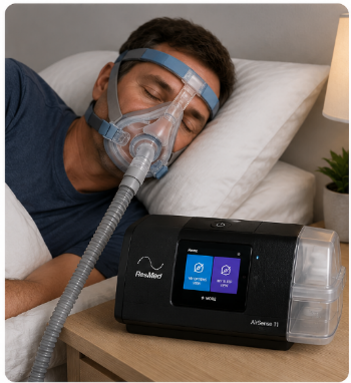
Treating OSA with continuous positive airway pressure (CPAP) can change this overnight stress response. CPAP keeps the airway open, reducing breathing interruptions, oxygen drops and repeated arousals. Research suggests that this can improve the body’s response to insulin and may lower blood glucose, sometimes quite quickly, with a study showing that just two months of consistent CPAP use caused a 40% overall drop in sugar levels that was sustained in the healthy range for around 95% of the day, compared to only 55% of the day before being treated. This finding is contested in some studies that found no improvement, however, the overall consensus shows strong evidence for long-term improvement only after consistent OSA treatment.
Will OSA treatment require modified diabetes treatment
These findings raise an important question for people with diabetes starting CPAP: could better breathing and better sleep change their diabetes management?
The answer may be yes. Not everyone will experience a meaningful change, and CPAP is not a treatment for diabetes. However, some people may notice lower glucose readings after starting effective OSA treatment. For those taking insulin or certain glucose-lowering medications, lower blood glucose can potentially increase the risk of hypoglycaemia, also known as a “hypo”. Although CPAP is not established as a direct cause of hypoglycaemia, this is an important reason to remain aware of changes in blood glucose following treatment.
This exacerbates the importance of people with T2DM starting CPAP to continue monitoring their blood glucose according to the advice of their GP or diabetes care team and discuss any unexpected high (>10) or low (<4) readings. A blood glucose level below 4 mmol/L is considered hypoglycaemia, with symptoms including: hunger, shakiness, sweating, dizziness, confusion and, in severe cases, slurred speech, seizures or loss of consciousness. For people with T2DM, starting effective OSA treatment may therefore be an important opportunity to reassess blood sugar control and, where appropriate, review their diabetes treatment plan.
References
Zhao, X., Zhang, W., Xin, S. et al. Effect of CPAP on blood glucose fluctuation in patients with type 2 diabetes mellitus and obstructive sleep apnea. Sleep Breath 26, 1875–1883 (2022). https://doi.org/10.1007/s11325-021-02556-0
Lam JC, Lam B, Yao TJ, Lai AY, Ooi CG, Tam S, Lam KS, Ip MS. A randomised controlled trial of nasal continuous positive airway pressure on insulin sensitivity in obstructive sleep apnoea. Eur Respir J. 2010 Jan;35(1):138-45. doi: 10.1183/09031936.00047709.
Herth, J., Sievi, N. A., Schmidt, F., & Kohler, M. (2023). Effects of continuous positive airway pressure therapy on glucose metabolism in patients with obstructive sleep apnoea and type 2 diabetes: A systematic review and meta-analysis. European Respiratory Review, 32(169), 230083. https://doi.org/10.1183/16000617.0083-2023