
The didgeridoo is one of Australia’s most iconic indigenous instruments, but did you know that it could also be a useful tool to help you breathe better in your sleep? In 2006, a group of sleep researchers in Switzerland decided to conduct a randomized control trial assessing whether playing the didgeridoo can help reduce upper airway obstructions during sleep for patients with moderate obstructive sleep apnoea (OSA).
The idea came about when didgeridoo instructor Alex Suarez noticed that he and some of his students experienced improvements in snoring and daytime sleepiness after practicing the didgeridoo for several months. This prompted him to get in touch with a research team at the Zurich Rehabilitation Clinic led by Milo Puhan. Together they hypothesized that the extensive training of the upper airway muscles required for didgeridoo playing may help to prevent these muscles from collapsing and obstructing the airway during sleep, thus reducing OSA severity.
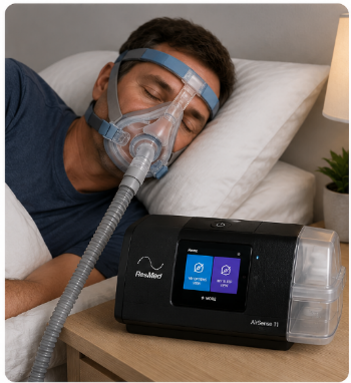
To test this hypothesis, the team recruited 25 patients with moderate OSA who were not on CPAP therapy (the traditional first-line treatment for OSA). The participants were then randomly allocated into 2 groups, with 14 in the didgeridoo-playing group and 11 in the control group. The didgeridoo group partook in 4 structured lessons with the instructor over the course of 8 weeks and were told to practise at home for at least 20 minutes per day on at least 5 days per week throughout the training period and for another 8 weeks afterwards. Each participant received a standardised acrylic didgeridoo to use throughout the study, since these are apparently easier to learn with for beginners compared to traditional wooden ones. The control group, meanwhile, were put on a waiting list and instructed to not independently start didgeridoo training. This is a slight limitation of the study since a sham placebo would typically be preferred as an ideal control condition; however, there was no feasible placebo that could convincingly mimic playing a didgeridoo. After 4 months, they found that the didgeridoo group showed significant improvements in daytime sleepiness, number of breathing events during sleep, and partner sleep disturbance compared to the control group – although there were no significant changes in self-reported sleep quality scores.
The didgeridoo is not the only musical method of training the upper airway muscles to alleviate OSA symptoms. A UK survey of professional choir singers found a small but significant decrease in snoring severity compared to non-singers. Further, observational studies have also suggested a correlation between playing double-reed wind instruments, such as the oboe or bassoon, and reduced OSA risk.
Although these musical techniques are unlikely to be as effective as first-line treatments for OSA such as CPAP, they have the benefits of being highly accessible and intrinsically motivating (i.e., many people would already be interested in learning to play an instrument or singing in a choir regardless of any potential benefits to their sleep). Furthermore, playing music has also been associated with numerous other health benefits beyond sleep, including memory, cognition, fine motor skills, and mental health.
References
Puhan M. A., Suarez A., Lo Cascio, et al. (2006). Didgeridoo playing as alternative treatment for obstructive sleep apnoea syndrome: randomised controlled trial. BMJ (Clinical research ed.), 332(7536), 266–270. https://doi.org/10.1136/bmj.38705.470590.55
Pai I., Lo S., Wolf D. et al. (2008). The effect of singing on snoring and daytime somnolence. Sleep Breath, 12, 265–268. https://doi.org/10.1007/s11325-007-0159-1
van der Weijden F. N., Lobbezoo F., Slot D.E. (2020). The effect of playing a wind instrument or singing on risk of sleep apnea: a systematic review and meta-analysis. J Clin Sleep Med, 16(9), 1591–1601. https://doi.org/10.5664/jcsm.8628