
The American Academy of Sleep Medicine recently commissioned Frost & Sullivan to produce two reports on the economic impact of obstructive sleep apnoea (OSA) and the patient experience of CPAP. The Australian Sleep Health Foundation assessed the economic impact of OSA with Deloitte in Australia in 2010 and came to somewhat similar conclusions. This article will focus on the second report; “what benefits do patients experience in treating their obstructive sleep apnoea?” as the patient experience may also be somewhat similar in Australia. To deliver this paper, over 500 U.S. patients currently on treatment for OSA recently completed an online survey and more than 100 leading articles of OSA were reviewed by Frost & Sullivan.
Findings
Similar to Australian populations, the prevalence of OSA is thought to be about 12% of adults with 80% of these being undiagnosed. The average age of diagnosis for patients with OSA was 53 years old.
Barriers to diagnosing and treating OSA: Both the general awareness from the public and the physicians understanding of the symptoms and severity of sleep disordered breathing were thought to contribute to low screening of sleep issues during physician consults. The authors query GP education relating to the urgency of diagnosis and treatment for the high percentage (80%) of undiagnosed OSA sufferers, with only 30% of respondents attributing their GPs to warning them of their risk of OSA and the subsequent diagnosis. On the TSGQ website, we have some really easy to use screening tools for OSA available for use (Epworth sleepiness scale and the STOP BANG questionnaire). 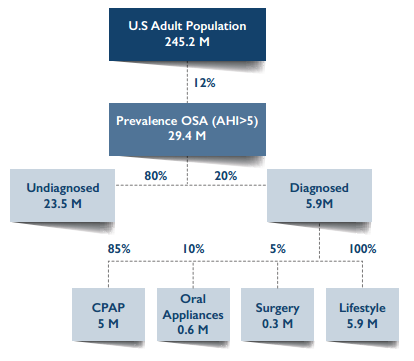 Realistically though, not all patients are even aware (or believe) that they snore, or they may have become accustomed to their high levels of fatigue. Only 12% of respondents flagged their suspicions of a sleep issue to their GP’s, and 70% or those that did flag it did so at the bequest of the bed partner having noticed the snoring. 40% of patients made an appointment to investigate their sleep within one month of seeing their GP, and a further waited two to four months before having their sleep investigated. Of all treatment options available, CPAP was the primary treatment option used by these OSA sufferers (see diagram).
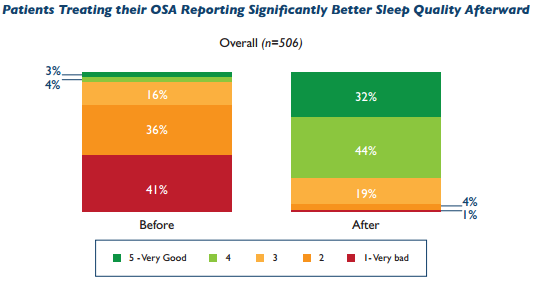
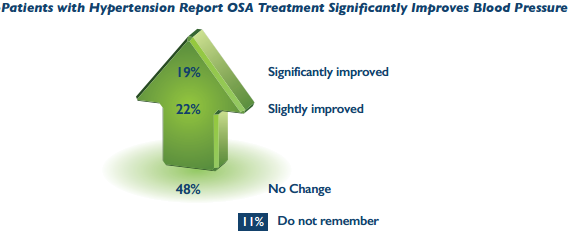
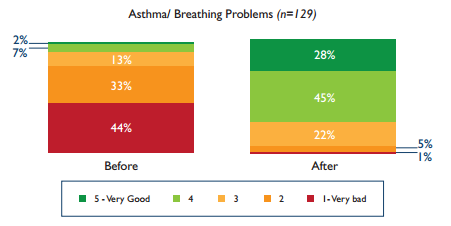
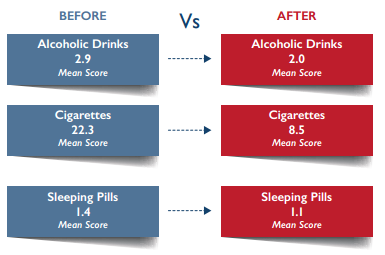
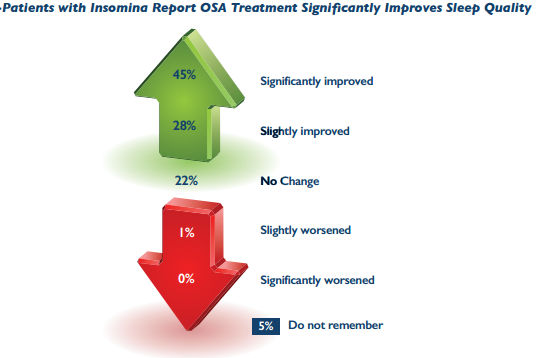
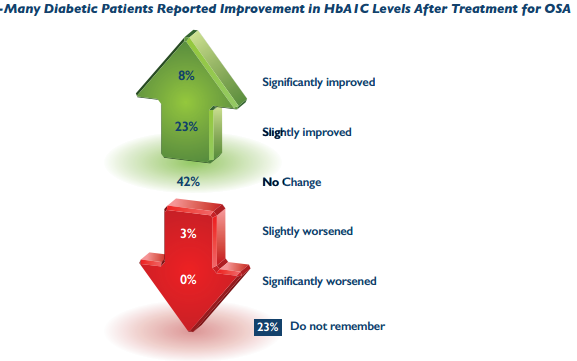
Benefits of using the therapy (see diagrams): 85% of respondents using CPAP consistently use their CPAP for 6.3 hours each night and have continued treatment for 7.4 years. While those compliance statistics are encouraging, it is more pleasing that those being treated for OSA had markedly improved sleep quality. In addition to the improved sleep quality, almost a third of respondents with hypertension reported improved blood pressure, a similar proportion of diabetics improved their HbAIC levels. Patients with sleep disorders being treated also reported that they drink less alcohol post treatment and smoked less cigarettes, it is therefore not surprising that 44% of these patients reported very bad Asthma/breathing problems before treatment and only 1% reported this severity afterward. Those on treatment also saw improvements in the amount of productive time spent at work and reported less absenteeism.
Article can be found here: http://www.aasmnet.org/Resources/pdf/sleep-apnea-patient-experience.pdf