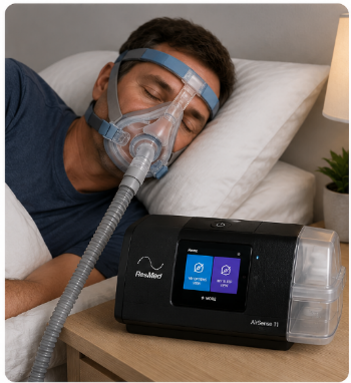

As the body, the brain and the senses adjust to wearing a CPAP mask, it is not uncommon that we wake up to find the mask on the floor. A number of factors play a role here. Using or wearing something for the first number of times can feel strange or even normal when we are awake, but when we enter the dream world, a more particular self can take over. If you wear glasses, can you think back to when you first started using them? It may have felt uncomfortable, itchy, a feeling of weight on the nose and face or even just the consciousness of something in your line of vision, especially for your peripherals. Wearing a CPAP mask for the first time or even the first number of weeks can feel very much the same. But there are a number of factors to consider. As you are sitting here reading this, there are a great number of things going on in your body and mind that are keeping you alive. Such as breathing, the one thing humans can go the least amount of time without. Your brain is making sure you breathe and stay alive even when you sleep. This can be shown in a number of ways, such as waking up frequently in the night or even needing to go to the bathroom multiple times when you haven’t had much fluid to drink that day. It is one of many of the body’s subconscious ways of waking you up and in some cases there is a specific reason why. For some people, this need to go to the bathroom often (nocturia) is the brain telling you to wake up because you are not breathing right while you sleep. Taking the CPAP mask off while we sleep shares similar relations. Which varies, as some people will say, I never take it off without knowing. But for some it’s multiple times a week. In the early days of CPAP use, for some, everything feels strange. There is this big plastic and silicone thing hanging off my face throwing air at me. For some, our first instinct is to throw it off straight away. If that’s the case, imagine how the brain feels while you are sleeping. Especially if you’re not consciously there to tell it not to throw it across the room. For some, this is the body’s natural form of preservation and comfort. You feel something on your face that perhaps early on feels claustrophobic, itchy, cuts off your full vision and keeps moving every time you hit the pillow. Bear in mind pillow selection is also a helpful factor for sleep with or without sleep aponea. The body is technically doing the right thing. You feel while you’re sleeping closed in or claustrophobic, and you associate that with lack of air, so you remove the thing in the way of getting you that air. Though in this case there is plenty of air available. That’s why it’s called CPAP continuous positive ‘airway pressure’, a fancy way of saying it’s giving you air, but hopefully not gas, don’t worry though, there’s a setting for that. But it gives you air to help you maintain air flow in and out. It’s there to help, but early on your subconscious brain doesn’t always know that yet. Just be reassured that it’s not uncommon, and often it gets better with time, or adjustments to the CPAP, of which there are multiple.
Climate plays a key role because, as we all remember, wearing a face mask in COVID times during a 35 degree Queensland summer was not fun and we were awake and telling ourselves not to take it off. Think of how a CPAP mask set to the tropics feels during summer. The same often goes for the cold air. If something is blowing cold air straight at us in the middle of winter, then we want it to stop.
There is also ‘response’, which refers to the rate of adjustment that the APAP (Automatic Positive Airway Pressure) version responds to and changes the pressure in relation to respiratory events. These sudden changes in pressure during sleep can cause us to wake up or even throw the mask off as we get a sudden gust of air. The subconscious brain is reacting. It needs to get used to all the new sensations of this life-changing therapy. Life changing in a good way, even if it doesn’t always feel that way at first. Luckily, there are multiple settings that help, ‘response’, just being one of them.
Lastly, mask selection is a key factor in the trial of CPAP. For many, it can take multiple different nasal and full face plus or minus chin strap combinations to get it just right. Certain masks very similar to certain glasses just don’t feel right and continue not to feel right. That’s why Optometrist shops have so many varieties. So don’t throw the CPAP mask in just yet, try a different mask or setting and remember that the brain is technically doing its job, it’s just not being as helpful as it can be.
Author: Michael L
https://www.cpapequip.co.za/post/is-it-normal-to-take-the-mask-off-at-night-without-realizing-it?srsltid=AfmBOorD1JNYohJSsloXsErzc3qMTG9zOKzy-M3qwqoMmOU1S-QkRP90