

26 Mar Midnight Wanderers: What’s Happening in the Brain
Sleepwalking isn’t just something kids outgrow. It affects up to 4 percent of adults, and for sleep specialists, it’s one of those disorders that still feels a little mysterious—until you dig into the brain science. Two key studies, one from 2015 and another from 2017, pull back the curtain on what’s really happening when someone gets out of bed in the middle of the night with their eyes open but their mind completely offline.
The 2015 review by Shreeya Popat and William Winslade nails it as a classic case of “state dissociation.” Normally your brain flips cleanly between deep non-REM sleep (those big, slow delta waves) and full wakefulness (fast, alert rhythms). In sleepwalkers, the two states bleed together. Episodes almost always strike during the deepest stages of non-REM sleep—stages 3 and 4—usually in the first half of the night when slow-wave sleep is heaviest. EEG readings show a weird hybrid: the large, slow waves of deep sleep mixed with the smaller, quicker waves you’d see when someone is awake.
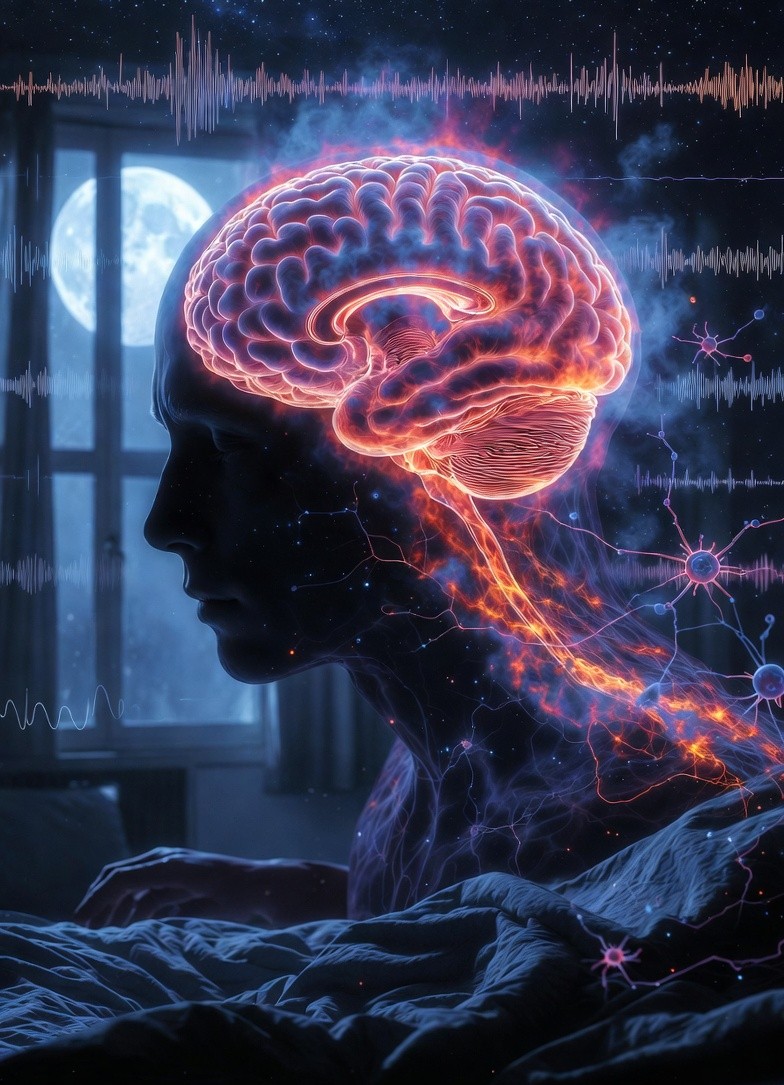
Here’s the kicker from the same paper: a SPECT scan study by Claudio Bassetti at the University of Zurich caught this in action. The brainstem and cerebellum—the old-school motor centers that handle basic movement and coordination—stay lit up and busy. Meanwhile, the cerebral cortex (the part that does judgment, planning, sensory processing, and laying down memories) is basically powered down. That’s why the person can navigate the hallway or even drive, yet has zero awareness and no memory the next morning. Their eyes often drift upward and inward, giving that classic vacant stare. Sensory input? Switched off. Pain, sound, smell—none of it registers.
But what actually triggers the episode? That’s where the 2017 high-density EEG work by Marie-Ève Desjardins and her team gets really specific. They studied 27 adult sleepwalkers (average age around 29) who had full-blown episodes captured right in the sleep lab. The researchers zeroed in on the 20 seconds right before each person sat up or stood, comparing it to a calm 20-second chunk from two minutes earlier.
What they saw was a perfect neurobiological collision. Delta and theta power—the very markers of deep, restorative slow-wave sleep—actually ramped up in those final seconds. At the same time, functional connectivity flipped: delta connections weakened in the parietal and occipital areas (the sensory-processing zones), while alpha connectivity strengthened across fronto-parietal networks and beta connectivity surged through symmetric pathways linking the front, temporal, parietal, and occipital lobes on both sides of the brain.
In everyday language, the brain was diving deeper into its most restorative sleep mode… but pockets of wake-like chatter were firing up, especially in the networks that control movement and arousal. It’s not a full awakening—it’s a partial one that gets the legs moving while the conscious mind stays parked.
Put the two studies together and the picture is clear: sleepwalking is a tug-of-war inside the brain. Genetic factors, sleep deprivation, stress, alcohol, or even untreated sleep apnea can push someone into extra-deep early-night slow-wave sleep or create those micro-arousals that tip the balance. The body gets the green light to move; the mind never does.
For sleep clinics, this science isn’t just academic. It explains why patients look awake but act on autopilot, why safety measures (alarms, locked windows, clearing obstacles) are non-negotiable, and why fixing underlying issues like breathing problems or insomnia can cut episodes dramatically. Next time someone describes a nighttime wander they can’t remember, you’ll have a clearer map of the midnight mix-up—and a better roadmap to help them sleep through the night, safely.
References:
Popat, S., & Winslade, W. (2015). While You Were Sleepwalking: Science and Neurobiology of Sleep Disorders & the Enigma of Legal Responsibility of Violence During Parasomnia. Neuroethics, 8(2), 203–214. https://doi.org/10.1007/s12152-015-9229-4