
Have you heard of Bubble? CPAP?
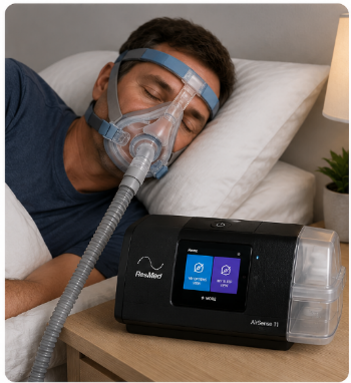
Traditional CPAP fundamentally works by providing a continuous positive airway pressure through a mask to an individual that has sleep apnea. Essentially, a fancy air blower that keeps the airway from closing when we sleep.
Bubble CPAP, or bCPAP, on the other hand, adds another factor: it makes sparkling water. But it works a little differently from your everyday SodaStream™.
Fundamentally, bCPAP is a closed system, composed of an inspiratory limb or tube that delivers tailored humidified gas (room air/oxygen) at approx. 37 degrees with a relative humidity of 100%. As the infant exhales the gas, the expiratory limb or tube, which is submerged in water, makes bubbles. The depth of the expiratory tube in the water determines the said pressure, i.e., to achieve 5 cmH₂O, it must be submerged 5 cm below the surface. Then as the gas exchanges, the bubbles within the water oscillate or fluctuate the pressure slightly, and the resulting bubbles create a vibration or frequency of pressure fluctuations that can support the recruitment of alveoli within the lungs. This bubbling also helps clinical staff to have visual feedback of flow. And as this is a closed system, it also promotes lung volume and helps prevent lung collapse in the small airways by providing support using pressure.
Some indications for use are:
Respiratory Distress in Spontaneously Breathing Neonate (a clinical syndrome characterized by a set of symptoms indicating difficulty in breathing, typically occurring shortly after birth or within the first few days of life)
Post-extubation Respiratory Support (the proactive application of non-invasive ventilation (NIV), CPAP, or high-flow nasal cannula (HFNC) immediately after removing an endotracheal tube)
Some contraindications for use are the following:
Unrepaired Congenital Diaphragmatic Hernia (an often-life-threatening condition where abdominal organs (stomach, intestines, liver) enter the chest cavity through a diaphragm defect, hindering lung development)
Esophageal Atresia (OA) is a birth defect where the esophagus (food pipe) ends in a blind pouch rather than connecting to the stomach. and Tracheoesophageal Fistula (an abnormal connection between the trachea (windpipe) and the esophagus, often occurring together with OA.)
Choanal Atresia (a congenital blockage of the posterior nasal passage, either bony or membranous, restricting airflow)
To summarise, Bubble CPAP can be a sound alternative to traditional CPAP in the delivery room, though further research and training for clinicians is needed before (bCPAP) could be commonplace in hospitals.
https://www.ncbi.nlm.nih.gov/books/NBK613282
Pic: https://www.freepik.com/premium-photo/refreshing-glass-sparkling-water-with-ice-bubbles-ideal-hot-days_402898543.htm