
Circadian clock genes form the basis of our 24-hour physiological and behavioural clock. The transcription of proteins from these genes, and the interactions between them, mediate the precisely timed circadian oscillation in the cells of many tissues. Despite this, the homeostatic regulation of sleep occurs independently of internal clock mechanisms and circadian rhythm. Furthermore, the increased need for sleep regulates the expression level of certain clock genes, which may cause deviations from natural circadian oscillations. In reaction to sleep deprivation, compensatory mechanisms in the brain cause homeostatic sleep, during which there is an increased duration of non-REM sleep and increased delta wave activity.
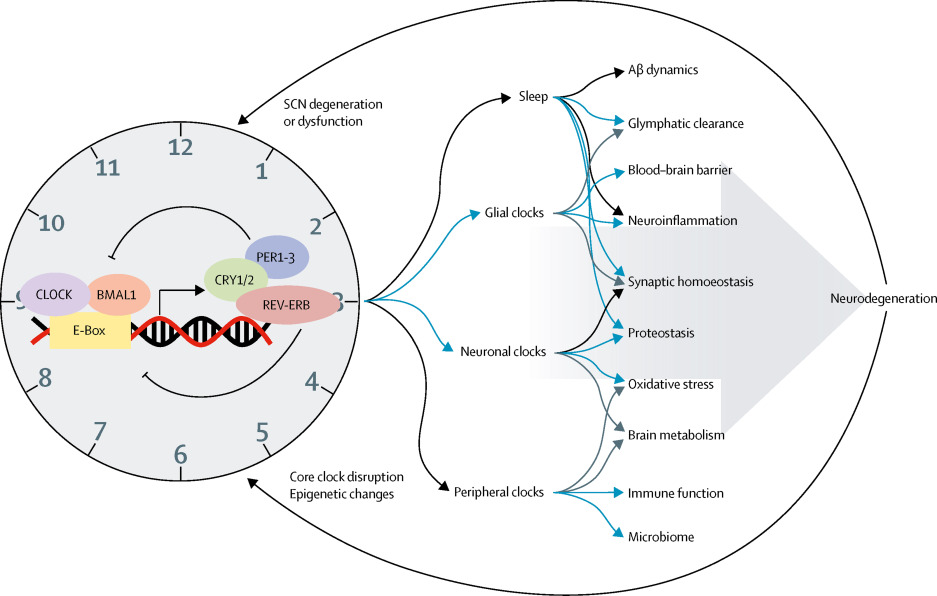
There are also alterations to clock gene expression levels in response to both acute and chronic stress, which can affect sleep onset and duration. In mice, increases in transcribed clock gene proteins in multiple brain regions has been shown after subjecting them to acute stressors. It has been hypothesised that this alteration in expression is an adaptive mechanism to prepare for future stressors. The effective modulation of circadian clock genes, through therapy, sleep manipulation, or pharmacological intervention, may reduce the impact of stress and sleep deprivation on cognition and brain function.
Reference List
- Landgraf D, McCarthy MJ, Welsh DK (2014). Circadian clock and stress interactions in the molecular biology of psychiatric disorders. Curr Psychiatry Rep. 16(10): 483. DOI: 10.1007/s11920-014-0483-7
- Bolsius YG, Zurriggen MD, Kim JK, et al (2021). The role of clock genes in sleep, stress, and memory. Biochemical Pharmacology. 1114493 (191). DOI: https://doi.org/10.1016/j.bcp.2021.114493