
A 48-year-old male, non-smoker, presented with chronic unproductive cough, worse at night.
- The patient had intermittent shortness of breath with subjective relief from Salbutamol
- A previous diagnosis of asthma was given based upon clinical symptoms; however, no formal lung function testing was performed
- The patient denied regular use of inhaled corticosteroids (ICS), and also denied symptoms of upper airway dysfunction
- Recurrent yearly chest infections were reported for the past 3-4 years
A Complex Pulmonary Function Test was performed: this demonstrated normal Lung Volumes (TLC, TGV, RV) with no associated hyperinflation, gas trapping or reduction in volume. DLCO measurement showed normal gas diffusion.

Findings:
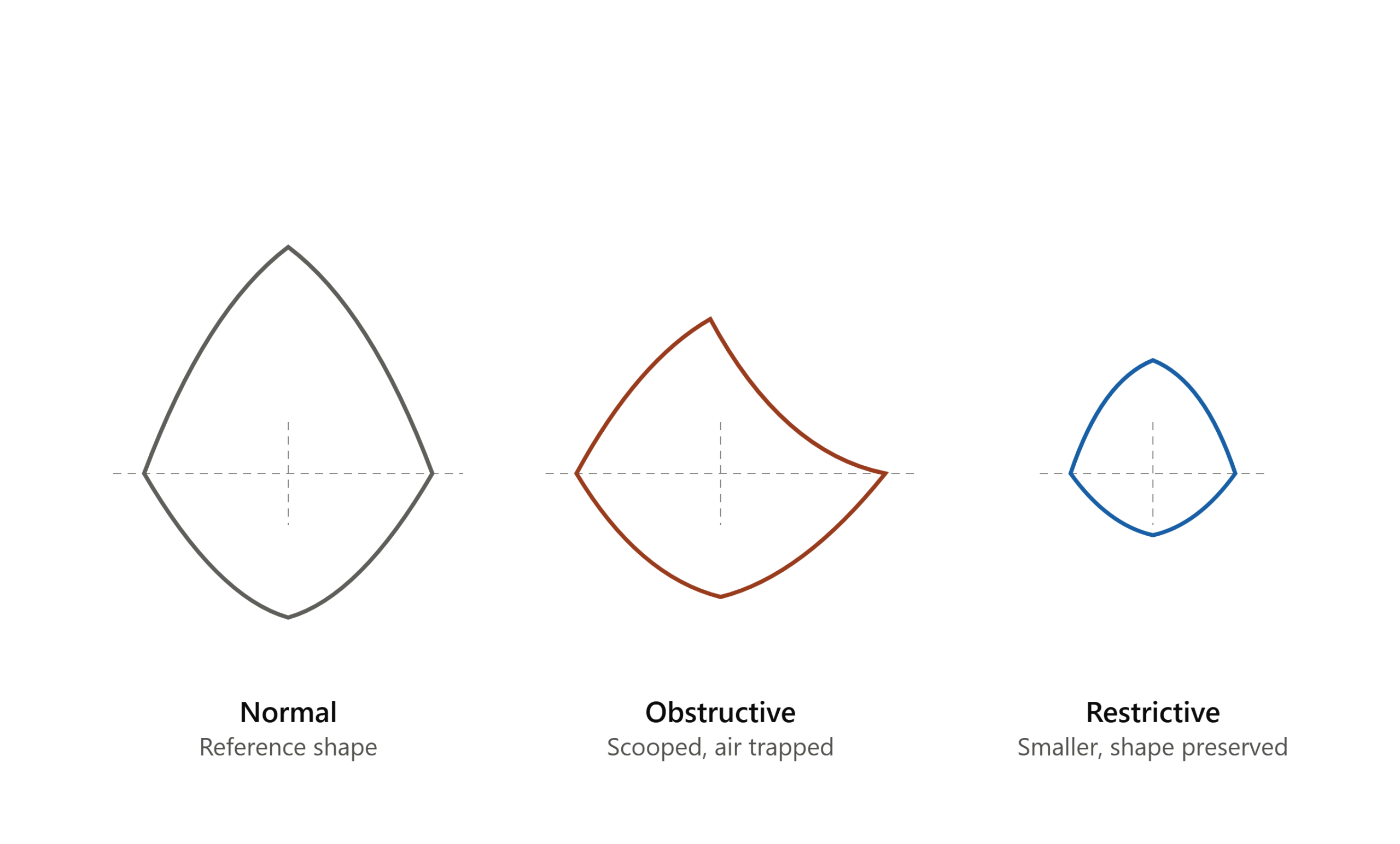
- Spirometry indicated mild airflow obstruction: reduction in FEV1 and normal FEV1/FVC ratio
- Post-bronchodilator spirometry: no acute response to bronchodilator.
- Further Bronchial Provocation Testing (twice): No bronchial hyperresponsiveness, confirming no evidence of asthma.
- FeNO=157ppb and nNO=2173ppb was consistent with significant upper airway Inflammation.
Discussion:
- This is a common finding, where a patient with chronic cough, dypsnoea and (upper airway) ‘wheeze’ is due to rhinosinusitis, with no evidence of asthma on formal airway testing.
- In this case there was only mild airway obstruction.
- In the absence of subjective upper airway symptoms, the nitric oxide (NO) testing confirmed significant eosinophilic sinus inflammation.
- Nitric oxide plays a role in bronchial smooth muscle tone and cilia beat frequency, consistent with the elevated levels being involved in the cough and intermittent dyspnoea.
The degree of small airway remodeling may be consistent with chronic upper airway inflammation.
Chronic upper airway seeding into the lower airway may result in recurrent chest infections, and exacerbation of chronic asthma (6x).