


29 Jan Is My Daytime Tiredness Making Me More Stupid?
Many of us experience fatigue throughout the day. It’s a feeling we’re familiar with—whether it’s the occasional afternoon slump or constant exhaustion that seems to creep into our daily lives. For people living with disorders like narcolepsy and idiopathic hypersomnia that are both marked by excessive daytime sleepiness, this fatigue can be much more than just a nuisance; it becomes a way of life. And for many, the impact of this fatigue isn’t just physical—it can make them feel cognitively impaired, as though their brain is foggy or sluggish.
This feeling of mental fog is often reported by individuals with disorders of fragmented daytime functioning, including narcolepsy and idiopathic hypersomnia. Cognitive complaints like memory lapses, slow processing speed, and reduced attention span are common in these groups, leaving many worried about their performance at work or school. Parents may also fear that their children aren’t reaching their full potential academically. But does this fatigue really impair intelligence? And, more importantly, does it make people “dumber”?
Cognitive Impairment or Just Fatigue?
Historically, it’s been assumed that fatigue directly leads to cognitive dysfunction. When you’re tired, it’s only natural that your brain doesn’t perform as well. But recent studies are challenging this assumption, suggesting that tiredness doesn’t necessarily equate to lower intelligence or cognitive decline.
A study examining narcoleptic patients found that while these patients reported cognitive difficulties, their performance on cognitive tests was largely comparable to that of people without sleep disorders. This finding suggests that despite the fatigue associated with narcolepsy, the cognitive impairment reported might be more of an effect of disrupted sleep cycles rather than a decrease in intelligence. Another study investigating narcolespy and hypersomnia adds to this, claiming those with hypersomnia perform similarly to controls in tasks assessing sustained, selective and divided attention, as well as executive function and memory. However, those with narcolespy came up short in these regions, especially tasks requiring attention allocation, complex tasks, and quick responses.
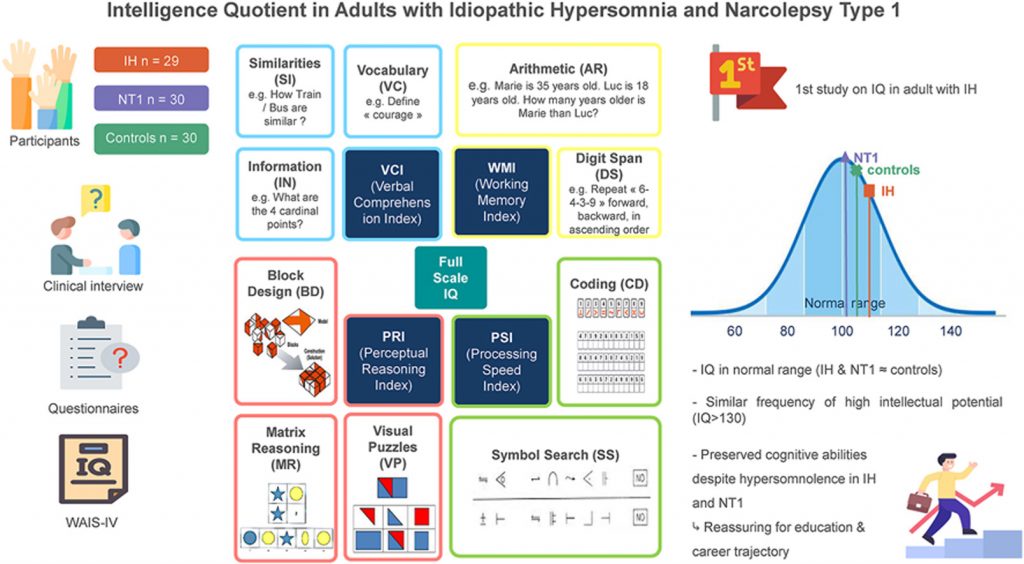
In a similar vein, the Look AHEAD Study (Daytime Sleepiness and Lower Cognitive Scores) found that people with excessive daytime sleepiness, whether from narcolepsy or idiopathic hypersomnia didn’t show a significant drop in cognitive scores when compared to healthy individuals. In fact, the study revealed that tiredness itself could be misleading as a measure of cognitive function—those who were sleepier didn’t necessarily have lower cognitive abilities, and that in fact, there were other measures that could better predict cognitive deficit. Overall, most studies conclude that people with idiopathic hypersomnia show the same IQ as normal controls, while patients with narcolepsy have the same IQ but seem to perform worse in more varied cognitive tests, usually requiring sustained attention.
Intelligence and Narcolepsy: Are They Linked?
A separate French study hypothesised the narcoleptics more frequent dream stage Rapid Eye Movement sleep corresponded protectively to more creative abilities, which increases IQ and more adaptive cognitive functions. This was later supported with up to 38 % of the 74 narcoleptic children possessing high intellectual potential, defined by an IQ > 130, compared to 2.5 % in the general child population despite the narcoleptics complaining of excessive daytime sleepiness, suggesting that even those with higher cognitive abilities can still struggle with the impacts of tiredness
However, the study Intelligence Quotient in Adults with Idiopathic Hypersomnia and Narcolepsy Type 1 used older participants and found those who reported having frequent daytime sleepiness (often or always) performed significantly worse than others on the cognitive tests. The study later concluded this was correlated with the participants having underlying sleep-disordered breathing from the previous night which exacerbated daytime tiredness. This finding shows the importance for people of all ages making sure they’re getting a good night’s rest before worrying over daytime tiredness and it’s implications.
The Bottom Line
So, is daytime tiredness making people “stupid”? The short answer is no. While it’s clear that people with narcolepsy and idiopathic hypersomnia may experience cognitive difficulties, recent studies suggest that these struggles aren’t linked to lower intelligence. To figure out if you have a sleep or daytime tiredness disorder, make sure you get in touch with your nearest sleep Doctor and organise a night or day sleep study.
References