
Sleep tracking has quietly become part of everyday life, mostly through smartwatches. A quick glance at your wrist in the morning can tell you how long you slept and give you a simple overview of your night a simple score. It feels clear and reliable.
Smartwatches work by tracking movement, heart rate, blood oxygen and sometimes skin temperature. They use this data to estimate whether you are asleep and what stage you might be in. Because they rely on patterns rather than direct measurement, the results are simplified and not always precise.
Polysomnography (PSG), used in clinical sleep studies, works very differently. It measures sleep directly by recording brain activity, eye movements, muscle tone, breathing, and more. This allows it to identify exactly when you fall asleep, which stage you are in, and whether anything disrupts your sleep.
For total sleep time, smartwatches can be reliable, however, they use a single algorithm, if you are lying still, you are probably asleep. This makes them helpful for spotting habits and tracking changes over time.
The same issue appears with wakefulness. Smartwatches often miss brief awakenings or mistake quiet wakefulness for sleep. PSG, on the other hand, captures these interruptions clearly, even when they are very short.
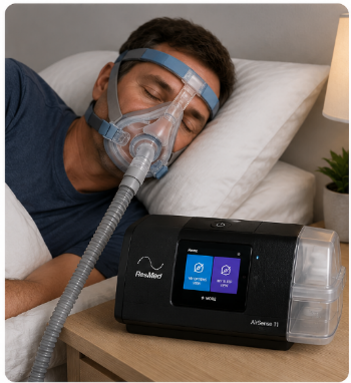
The gap between estimation and measurement becomes especially important in the context of sleep apnoea. This condition involves repeated interruptions in breathing during sleep and can have significant health consequences if left untreated. Diagnosing it requires precise measurement of airflow, respiratory effort, oxygen desaturation, and the frequency of these events. PSG captures all of this, allowing clinicians to calculate severity and determine appropriate treatment.
This difference matters most for medical conditions like sleep apnoea. Some smartwatches try to flag potential issues using oxygen levels or heart rate patterns, but they do not measure breathing directly. PSG does, which is why it is required for diagnosis.
Despite these shortcomings, smartwatches still have an important role. Their strength lies in accessibility and long-term tracking. Unlike PSG, which usually captures a single night in a controlled setting, a smartwatch can monitor sleep over weeks or months in a familiar environment. This makes it valuable for identifying trends and understanding how lifestyle factors influence sleep. In that sense, it is less a diagnostic tool and more a behavioural one.