
We all know how bad smoking is, especially how it affects your lungs and heart while significantly increasing the risk of cancer. What’s less recognised is how significantly smoking disrupts sleep.
Emerging research shows smoking disrupts sleep at multiple levels, quietly impacting long-term health. Nicotine, found in cigarettes and vapes, is a stimulant, keeping your brain alert when it should be winding down. Smokers often experience insomnia, fragmented sleep and overall poor sleep quality. A study conducted by Mauries et al. (2023) confirms this. The study found that smokers have a significant reduction in N3 sleep (deep sleep). N3 sleep is particularly important for physical recovery as this stage of sleep is where the body repairs itself.
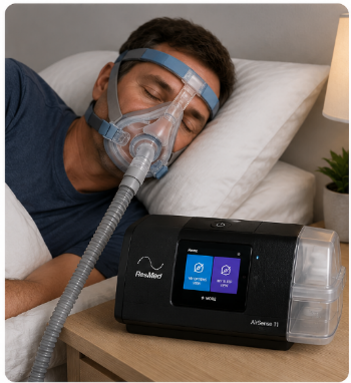
Obstructive sleep apnoea (OSA) is a common sleep related breathing disorder where the airway narrows or collapses during sleep, leading to drops in oxygen levels and frequent micro-awakenings. The relationship between smoking and OSA is complex, research suggests that while smoking does not directly cause OSA, it can worsen symptoms. However, some research states individuals that have a history of ≥20 pack-years have an increased risk of developing OSA.
Studies show that active smokers often have a higher number of apnoeas per hour, higher arousal indices, lower overnight oxygen levels and more severe hypoxaemia compared to nonsmokers with OSA. These effects can make sleep apnoea more harmful and symptomatic, particularly when combined with other risk factors such as obesity.
This is particularly concerning because both smoking and sleep apnoea independently increase the risk of cardiovascular disease, including heart attacks, stroke, and hypertension. When OSA and smoking combine, they may act as a “double hit” on the cardiovascular system, compounding long-term health risks.
The good news is that quitting smoking can improve sleep quality over time and may reduce airway inflammation, although sleep can temporarily worsen during withdrawal due to nicotine dependence. The long-term effects of smoking cessation on sleep apnoea severity are still being studied, but early evidence suggests overall benefits to sleep and respiratory health.
If you’re struggling with your sleep, quitting smoking may be one of the most powerful changes you can make, starting tonight.
Sources:
Ioannidou, D., Kalamaras, G., Kotoulas, S., & Pataka, A. (2021). Smoking and Obstructive Sleep Apnea: Is There An Association between These Cardiometabolic Risk Factors?—Gender Analysis. Medicina, 57(11), 1137. https://doi.org/10.3390/medicina57111137
Lv, R., Liu, X., Zhang, Y., Dong, N., Wang, X., He, Y., Yue, H., & Yin, Q. (2023). Pathophysiological mechanisms and therapeutic approaches in obstructive sleep apnea syndrome. Signal Transduction and Targeted Therapy, 8(1), 218. https://doi.org/10.1038/s41392-023-01496-3
Mauries, S., Bertrand, L., Frija-Masson, J., Benzaquen, H., Kalamarides, S., Sauvage, K., Lejoyeux, M., D’Ortho, M., & Geoffroy, P. A. (2023). Effects of smoking on sleep architecture and ventilatory parameters including apneas: Results of the Tab-OSA study. Sleep Medicine X, 6, 100085. https://doi.org/10.1016/j.sleepx.2023.100085
Pataka, A., Kotoulas, S., Kalamaras, G., Tzinas, A., Grigoriou, I., Kasnaki, N., & Argyropoulou, P. (2022). Does Smoking Affect OSA? What about Smoking Cessation? Journal of Clinical Medicine, 11(17), 5164. https://doi.org/10.3390/jcm11175164
Patel, A. K., Reddy, V., Shumway, K. R., & Araujo, J. F. (2024, January 26). Physiology, sleep stages. StatPearls – NCBI Bookshelf. https://www.ncbi.nlm.nih.gov/books/NBK526132/
Singh, N., Wanjari, A., & Sinha, A. H. (2023). Effects of nicotine on the central nervous system and sleep quality in relation to other stimulants: a narrative review. Cureus, 15(11), e49162. https://doi.org/10.7759/cureus.49162
Varghese, J., & Gharde, P. M. (2023). A comprehensive review on the impacts of smoking on the health of an individual. Cureus, 15(10), e46532. https://doi.org/10.7759/cureus.46532
Zeng, X., Ren, Y., Wu, K., Yang, Q., Zhang, S., Wang, D., Luo, Y., & Zhang, N. (2022). Association between Smoking Behavior and Obstructive Sleep Apnea: A Systematic Review and Meta-Analysis. Nicotine & Tobacco Research, 25(3), 364–371. https://doi.org/10.1093/ntr/ntac126