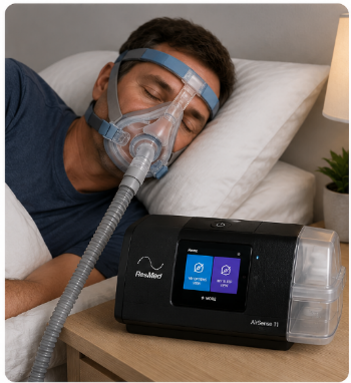

Note: the device in the image above is not likely to have been used in the study
Roth et al. recently published an article in the Journal of Sleep where they tested a forehead temperature-regulating device as a therapeutic tool for insomnia.
Insomnia is a prevalent sleep disorder, with it being thought that about a 3rd of the population will experience insomnia at one point in their life. Insomnia can be acute or chronic and can be caused by a variety of factors, either physiological or external in nature. The Australasian Sleep Association (ASA) recommends cognitive behavioral therapy for insomnia (CBT-I) as a first line therapy for insomnia. Sedative medications are also commonly used to treat insomnia.
Treatments not involving pharmacological therapy are sought after, by both patients and their treating physicians. This study looks to test one of these therapies, a forehead cooling device.
Does it work?
Essentially, there seems to be some mild improvement to sleep for the patients with insomnia who used this cooling device during the study. The authors statement of significance: The management of insomnia patients is complicated by the adverse safety profiles of hypnotics. Effective treatments for insomnia that are not only effective but also safe are needed. The main findings of this study are that acute two-night use of frontal cerebral thermal therapy has few side effects and produces improvements in insomnia patients’ ability to fall asleep. Additional studies are warranted to determine its role in the long-term management of insomnia.
Citation:
Thomas Roth, David Mayleben, Neil Feldman, Alan Lankford, Timothy Grant, Eric Nofzinger; A novel forehead temperature-regulating device for insomnia: a randomized clinical trial, Sleep, , zsy045, https://doi.org/10.1093/sleep/zsy045
References:
https://www.sleep.org.au/documents/item/2980
https://www.sleep.org.au/documents/item/2983